

ALL ELECTRIC. ALL HERE.
Say hello to the next generation of MINI
Say hello to the next generation of MINI, where legendary go-kart feeling meets instant electric torque. It’s everything you love about MINI. Our all-electric lineup is designed to make every drive unforgettable, whether you’re zipping through city streets or heading off on your next big adventure. Discover just how easy electric can be: seamless charging solutions, a driving experience that’s as efficient as it is exhilarating, and embracing a lifestyle that’s 100% MINI.
The Benefits of Electric Cars.

DRIVING FORWARD.
Drive with a clear conscience. With an all-electric MINI, you’re not just reducing CO2 emissions and noise pollution - you’re leading the charge for environmentally-conscious mobility. It feels as good as it looks.

CHARGING MADE EASY.
CHARGING MADE EASY.
Charging your MINI has never been simpler. Plug in at home overnight and wake up to a fully charged battery, ready to take on the day. With a home charger, you save time and enjoy reliable, stress-free charging - all from the comfort of your driveway.

LOW RUNNING COSTS.
Electric MINI, minimal hassle. With fewer moving parts - no oil filters, spark plugs, or exhaust systems - your maintenance costs stay low. Plus, charging is often cheaper than refueling, making every drive as efficient for your wallet as it is for the planet.

GO-KART FEELING REIMAGINED.
Who says electric mobility can’t be thrilling? The instant torque of an all-electric MINI delivers seamless acceleration and that iconic go-kart feeling you love. Thanks to its low center of gravity and balanced weight distribution, every corner becomes pure driving joy.
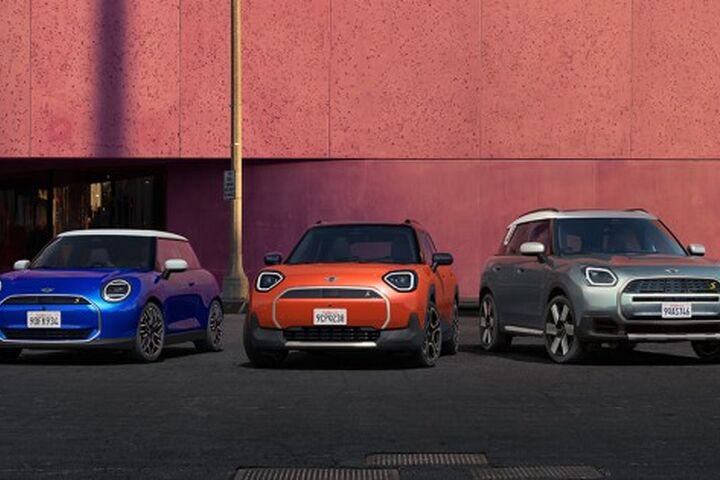
THE NEW ALL-ELECTRIC MINI FAMILY.
Discover the new all-electric MINI family and experience driving excitement reimagined. Find the MINI model that’s perfect for you and learn all about charging options, ranges, and the benefits of going electric.

PUBLIC CHARGING.
Power up wherever you go! With access to one of Europe’s largest and fast-growing charging networks – you’ll always find a convenient spot to recharge your MINI. Whether it’s a quick top-up or a full charge, downtown or out and about along major highways, public charging keeps your adventures rolling without missing a beat.

HOME CHARGING.
Recharge your MINI while you relax at home. With our easy-to-use home charging solutions – like the MINI Wallbox or the MINI Flexible Fast Charger – you can choose the charging speed and solution that works best for you. It’s as simple as plugging in overnight and starting your day fully charged and ready to go.

FOOT UP. CHARGE UP.
Regenerative braking makes every journey smarter. Lift your foot off the accelerator, and your MINI turns deceleration into energy, recharging the battery as you drive. It’s smooth, efficient, and means you’ll barely need to touch the brake pedal. Who knew slowing down could be so electrifying?

CHARGE SMART. DRIVE FAR.
For the most time-efficient charging stops on long trips, keep your MINI’s battery between 10% and 80%. Charging beyond 80% takes a bit longer, so this range gets you back on the road quicker. Need a full charge? No problem — your MINI follows your lead! But adding a quick charging stop down the road might just keep your journey smoother and faster.
FAQ
It's possible to charge your all-electric MINI vehicle from the grid just like any other appliance or device using the standard charging cable supplied, which can plug into any conventional wall socket. This method of charging can be very slow, however, and a dedicated home EV charger is a much better, safer and faster option. MINI offers additional charging options such as an original MINI Wallbox that gives you a convenient, faster alternative with scalable charging power and a dedicated, 3-phase 11 kW connection. Or a smart home charger provided by our partner Pod Point offers safe and intelligent charging with standard installation included in the price. You can also speak to your MINI partner about a combination of MINI Charging products and services ideally tailored to your domestic charging circumstances
Cold weather can indeed temporarily reduce EV battery range by about 10-12%. But nowadays, most EVs have a reach of 250-300 km anyway. Easily enough for a daily commute. And thanks to their design, they are far more efficient than people think in winter. They perform arguably better in snow than conventional cars due to the low position of the battery and the resulting lower centre of gravity. Your best defence in cold spells is not letting your all-electric MINI vehicle get below a 20% charge. This acts as a reserve in case the battery is too cold and needs to draw from that stored energy to begin the charging process. Furthermore, to charge efficiently, your car’s battery likes to be within a certain temperature range – 15 to 25°C. If it’s really cold outside, the battery needs to warm up first before it can charge at faster speeds. So, if possible, keep your car in a garage so it is not affected as much by the temperature outside.
National grid capacity isn’t the big problem most people think. So far, the market entry of EVs in the EU has been very predictable and the electric grid is constantly being developed in in parallel. So there is no need for new electricity-generation capacity in the near future. Utility companies have had the time to plan ahead. However, the situation is country-specific. For example, in northern Europe, the evolution is more effortless because of the strong power grids and electric heating already in place. In other areas of Europe, the evolution is a bit more difficult due to the one-phase energy systems and older structures. But this is being adddressed at speed. In fact there is an ‘unexpected’ twist to this answer as electric vehicles can provide a vital source of flexibility in the energy system. Rather than being a threat to grid stability or capacity, EVs act as big batteries on wheels. They make it possible for energy to be stored and used at a later time. In the next few years, we will have a pool of EV chargers utilised as aggregated reserves.
Electric drive trains have far fewer moving parts than internal combustion engines (ICE), meaning electric cars can be cheaper to maintain, especially as servicing tends to cost less on average when compared to an ICE car. In addition to saving on servicing costs, the lower cost of using electricity to power your car when charging at home can add up over time, increasing your savings even more. However, while there are aspects of electric car ownership that are clearly cheaper than costs associated with an ICE car, you can expect traditional car parts such as tyres and brake pads to cost roughly the same.
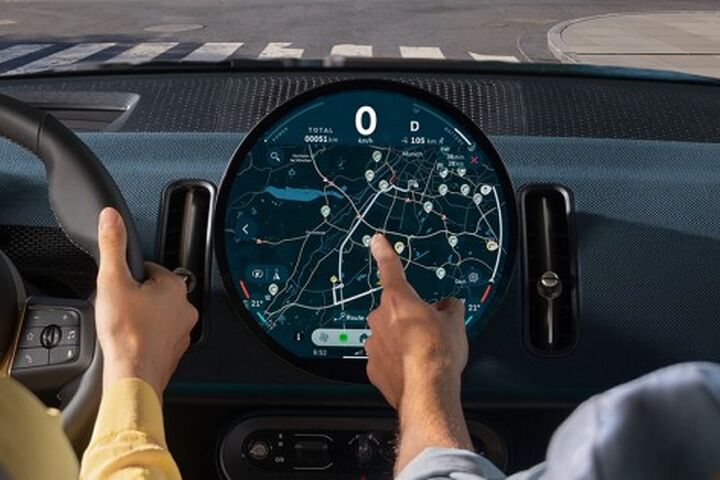
THE MINI ROUTE PLANNER: EFFORTLESS TRAVEL.
Sit back and let your MINI do the planning! With charging optimized routes, you’ll always know the quickest and most efficienct way to your destination - complete with the best charging stops along the way. Just pick your destination, and the navigation takes care of the rest. Plan your route ahead of time via the MINI App, see the ETA including charge stops and send the destination to your MINI. Just get in and get going. Curious to see how easy and fun it is? Download the MINI App and explore the demo mode - no MINI required (yet).
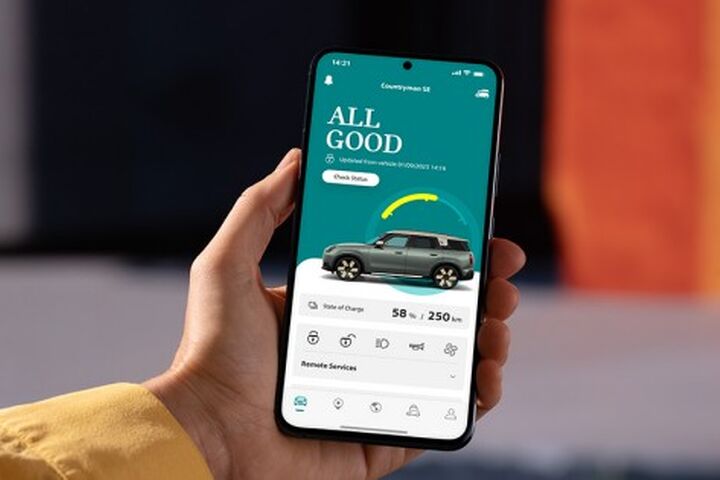
THE MINI APP: YOUR SMART ELECTRIC COMPANION.
The MINI App (amongst many other features) puts e-mobility at your fingertips. Check your MINI’s state of charge, plan charging-optimized routes, and explore smart services like MINI Charging that make electric driving easier than ever. Stay updated with regular upgrades, and even try the app in demo mode . It’s all about making your electric journey simple, fun, and totally MINI.